
Treatments and Procedures
MOTIVATION FOR SCALE AND POLISH / CLEANING OF TEETH
Your periodontal (gum/bone) assessment will identified gum infection in areas of your mouth. A treatment plan will be established which will require a certain amount of visits from you.
You will also be advised of the appropriate home care techniques and products at your bi-annual check-up appointment. This is an extremely important aspect in the success of your treatment and home maintenance.
Should any areas be found to be unresponsive the most appropriate options will be discussed with you. Our aim is for you to gain maximum response to treatment and this is achieved by following the recommendations of the treatment programme.
The maintenance care is to secure optimal control and to prevent the return of any gum disease. Maintenance is continuous for the life of the teeth and is the most important part of the total treatment.
There are, however, certain unavoidable consequences to treatment which may include: –
(a) Teeth may appear to be longer due to shrinkage after healing.
(b) Some teeth may initially be sensitive to extreme temperatures and sugar.
(c) Certain teeth may show a residual mobility (some teeth may still feel loose).
It is highly recommended that a regular six monthly appointment with the oral hygienist be adhered to, unless a more frequent interval is required.
Thanking you and looking forward to assist you on this path to optimal health.
SEALANT RESTORATIONS AND FISSURE SEALANTS
As part of the anatomy of the occlusal or top surfaces of the teeth, one finds fissures. These fissures are often discoloured. This discolouration is caused when at a certain time the individual is unable to clean these fissures properly due to incorrect brushing technique. The tooth then loses mineral from this area and the tooth becomes prone to caries.
The cavities in these fissures are often not very deep especially if dealt with at an early stage. Often they can be cleaned and sealed without the use of anaesthetic. No needles!
Sealant restorations are therefore highly recommended in the prevention of cavities in those teeth which are already discoloured.
In those teeth where there is no discolouration fissure sealants are recommended in the prevention of fissure caries. Fissure sealants are placed on primary teeth as well as permanent teeth. It is especially recommended on all individuals who are prone to cavities and are placed on all premolar and molar teeth. Fissure sealants often need to be placed every six months if needed as they undergo wear and tear due to occlusal trauma. (Eating, Grinding)
Discuss with your dentist or oral hygienist whether you need either sealant restorations or fissure sealants.
ORTHODONTIC TREATMENT // BRACES
One can regard orthodontic treatment as a two stage process.
The first stage is the fixed stage, which involves the dentist and the patient. During this stage, in most cases, the patient has no control over the orthodontic process. It is during this stage that the teeth are straightened. Please remember that the rate of tooth movement of each patient cannot accurately be determined.
Fundamental during this stage is the maintenance of good oral health practices. Negligence results not only in cavities but in unsightly staining of the teeth once the braces are removed.
Once the teeth are straightened and the braces are removed, we enter the final stage of treatment. This stage is completely dependent on patient compliance.
There is always a certain amount of relapse once the braces are removed. It is critical that the patient wears a retainer to minimize relapse. Also, patients need to make sure that they come for their 3 and 6 months follow up to monitor for any possible relapse.
RISKS AND BENEFITS OF ORTHODONTIC TREATMENT
BENEFITS
Orthodontics plays an important role in improving overall oral health and achieving balance and harmony between the face and the teeth for a beautiful healthy smile which en chances the self esteem. Properly aligned teeth are easier to brush and so the tendency to decay may be decreased as may the likelihood of developing disease of the gums and supporting bone. Also well aligned teeth are less likely to experience abnormal wearing down of teeth.
RISKS
- Under normal circumstances, orthodontic treatment gives excellent results, but because of various factors such as cooperation, unfavourable facial growth and tooth anatomy, treatment results cannot be guaranteed. We will of course do everything to achieve good results.
- Sometimes a tooth may be traumatised by a previous accident or a tooth may be decayed or have a large filling which may cause damage to the nerve of the tooth. Orthodontic tooth movement in some cases aggravates this condition and in rare cases may lead to loss of tooth vitality and decolourisation of the tooth requiring root canal treatment to restore the colour of the tooth.
- In some patients the roots of the teeth may be shortened during orthodontic treatment. It is impossible to predict susceptibility. Usually the shortening does not have any significant consequences, but on rare occasions it may become a threat to the longevity of the teeth involved.
- The gums, cheeks and lips may be scratched or irritated by newly placed appliances. Very rarely, loose orthodontic appliances may be accidently swallowed or aspirated. Please inform the dentists of loose appliances as soon as they are noted.
- Poor cooperation, poor oral hygiene, broken appliances and missed appointments can lengthen the treatment time and affect the quality of the end results.
- Failure to cooperate or continued breakages may force the dentist to change the treatment plan and thus the goals of the treatment. As last resort the treatment may be suspended. The consequences of suspended treatment may be worse than no treatment at all.
- If the retainer is not worn after the treatment, the possibility for relapse is increased.
Instructions for orthodontic patients
Your orthodontic treatment represents an investment in your oral health and wellbeing. It is important to realize that the following Do’s and Don’ts were designed to ensure the success of your orthodontic treatment.
DO’S
Brush teeth immediately after breakfast, lunch and before bedtime as directed.
Use wax to cover appliance which may irritate lips, cheeks or gums. Cotton wool coated with Vaseline can also provide some relief. If soreness persists please call the rooms.
Use fluoride gel or toothpaste as directed daily. The use of fluoride helps to protect the enamel by strengthening its surface. Drink at least 2 glasses of milk every day.
You may be asked to wear elastics or a plate. It is vital you co-operate to complete treatment quickly and satisfactory.
For the first few days of braces you may feel discomfort. Take what you normally would for a headache. This discomfort should last only a few days.
After your braces have been placed it is imperative that you schedule an appointment with the oral hygienist who will teach you how to take care of your teeth and braces.
DON’TS
Do not wait for your appointment to report a problem.
Do not play with wires or other parts of your appliances with tongue, finger or pencils…etc.
Do not eat any hard sticky foods. Sticky foods such as caramels, toffee apples, Bar One, should not be eaten. Avoid hard foods such as peanuts, muesli bars, popcorn, crusty bread, chips and ice.
All apples carrots, corn-on-the-cob etc. can be eaten if cut up. Do not bite into these with your front teeth.
Try to choose diet soft drinks rather than full sugar drinks. Chewing gum is out! Eat chipped biltong.
Use your common sense in choosing the foods you eat as breakages will delay your treatment.
BREAKAGES
Breakages must be reported immediately. Leaving a breakage for even a short time can significantly increase overall treatment time as the next phase of treatment may not be able to be implemented at your next appointment due to the breakage.
No matter how close the breakage occurs to your next appointment, please contact our office to inform us of the breakage so that more time can be allocated for you.
Finally, it is essential to see your oral hygienist every six months for regular checkups and advice. Remember poor oral hygiene can cause tooth decay and problems with your gums. Damage is caused by plaque that is allowed to collect around the appliances.
Damage to teeth that have not been carefully cleaned as instructed is your responsibility. Surfaces of teeth which are brushed and cleaned as directed should not be adversely affected by orthodontic appliances.
How do braces work?
- Brackets are placed onto the teeth. These are specific to a particular tooth. Their design helps in determining the angle of a particular tooth.
- A wire is placed into a slot on the bracket. The wire has a built in shape and is held to the tooth by an elastic. The tooth moves to the shape of the wire.
What happens after the braces are placed?
- The first step is to correct the angles of the tooth.
- This is followed by correcting the smile lines.
- If there is too much crowding in the mouth, teeth will be removed. These are generally the premolar teeth ( behind the eye teeth ).
- Now the front teeth are pulled back into this created space.
- Once the spaces are closed, the roots must be aligned with the crowns of the teeth.
- Finally the teeth must be stabilised in their new position.
If extractions are needed, you will be informed at least a month before.
If you have any questions or concerns please let the receptionist know so that she can arrange for us to chat.
Please remember that tooth movement cannot be predetermined and so the time that the braces will be on is an estimate only.
Most common questions
ྊ Why do the brackets break so often?
It is exceptionally difficult to adjust the eating style to prevent breakages. Some children just never get the hang of it. Read the dos and don’ts and exercise patience with your child.
ྊ When are you going to change my wires?
The wires serve a particular function and we need to get that done first before we can move to different wires.
ྊ When are the braces coming off?
Remember that we have to stabilise the teeth before the braces are removed.
THE ROOT CANAL/ ENDODONTIC TREATMENT
The dreaded root canal. It’s really not as bad as its reputation.
A nerve on a tooth dies or becomes infected for a number of reasons. The most common reason is caries. A tooth consists of a nerve chamber and 1 to 4 nerves which run down into the root/s of the tooth. The number of nerves depends on the tooth. Root canal treatment is generally over 2 visits.
The first visit: We remove as much of the nerve and bacteria from the nerve canals as possible. We place an antibiotic into the area with a temporary filling containing a sedative. Sometimes the tooth is still very sensitive to pressure after the anaesthetic has worn off. This discomfort may last 1 to 2 days.
The second visit: We will see you 1 to 2 weeks after the start of the root canal treatment. This visit is usually about an hour long. At this visit we measure the length of the nerve canals and the nerve canals are cleaned and sterilised thoroughly. The canals are now filled and sealed. A permanent filling is now placed. The tooth may be tender to bite on but this subsides quickly within a day or two.
If after 2 days there is still discomfort on the tooth, please contact the rooms.
Any negatives? Pain. Sometimes. We will anaesthetise you again should this happen or instruments may fracture. We minimize this possibility by using new instruments.
What are the possibilities that your root treated tooth may later give you problems? Not often but sometimes. We will obviously do everything possible to minimize this possibility but it is obviously not possible to give absolute guarantees. Bacteria from the infected tooth nestles in the bone surrounding the root. Healing of this area is dependent on your body’s ability to get rid of this bacteria. Remember we are dealing with the body, which is dependent on your resistance levels.
Part of the success of a root treated tooth is the ability to seal the filled root canal from the surrounding environment. In other words the filling that is placed must not leak. If it does, bacteria will re-enter the root of the tooth and re-infect the tooth. More often than not teeth that need to be endodontically treated have very large fillings associated with them. These fillings often extend below the gum line and the success of this seal is dependent on your ability to take care of the tooth.
Because of the large fillings these teeth are also vulnerable to fracture.
It is therefore best to do a post and core crown on these teeth. This involves the placement of a post into the root of the tooth to give it strength. Over this we place a crown for optimal seal.
Teeth which are root treated often lose their colour over time and will become darker than the surrounded teeth. There are two ways of dealing with this. If the filling on the tooth is small, the tooth can be bleached. If the filling is large a post and core crown may be indicated.
What happens if a root treated tooth gives problems
Why do endodontically treated teeth give problems? Below are the main reasons:
a nerve is missed during the original endo
there are still bacteria nestled in the canals
there are still bacteria nestled in the bone supporting the tooth
the root canal was done inadequately due to stones in the canals or difficult anatomy of the root system
the filling on the tooth is leaking
The tooth becomes re-infected and possibly starts paining. Perhaps is sensitive to pressure.
What is the treatment protocol?
- I will first place you on an antibiotic to see if we can clear up any infection in or around the root.
- If this doesn’t settle the tooth, the next option is to redo the root canal.
- If the tooth is still symptomatic, an apicectomy is indicated.
- If there are still problems, the tooth will have to be removed.
REMOVABLE OPTIONS
Dentures
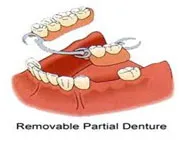
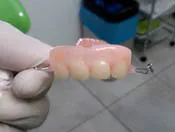
False teeth on a “plate” that is held by clipping onto your natural teeth. You can remove it from your mouth
Advantages
- Don’t have to weaken any of the healthy teeth next to the gaps to facilitate the false teeth
- Most inexpensive option usually
Disadvantages
- Becomes loose over time
- Must be re-made every 3-5 years
- Not always as comfortable as other options
- May break
3 TYPES
Acrylic
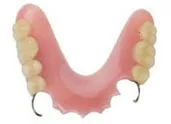
- Most inexpensive option
- May break when dropped
- More bulky
Chrome
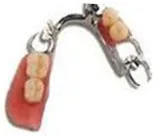
- Comfortable
- Less bulk (thinner sections)
- Strong
- Chrome coloured (silver) clips
Flexible
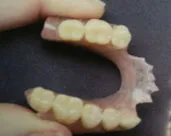
- Comfortable
- Most comfortable, very thin
- Clips are same colour as gums
- Not everyone is a candidate
NOTE: if you have no teeth in either the upper, lower or both jaws, the acrylic and chrome dentures can be made. The only difference being that the denture will not have clips on it that are secured to natural teeth
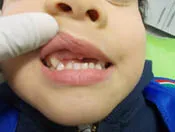
Kids Dentures



FIXED OPTIONS:
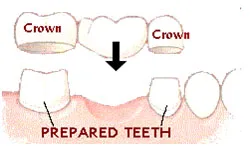
Crown and bridge work
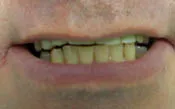
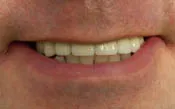
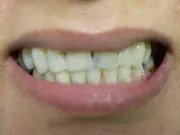
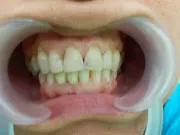
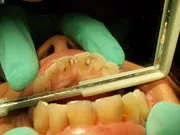
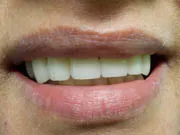
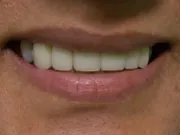
The teeth adjacent to the gap are cut down. A false “cap” resembling a tooth is cemented onto the teeth that are cut down. These caps hold a false tooth which replaces the missing tooth
Advantages
- Good aesthetic result
- If looked after well can last for life
- Cannot be removed from ones mouth
Disadvantages
- Must cut down the tooth/teeth adjacent to the gap/s to support the false tooth
- More tricky to clean than other options
TAKING CARE OF YOUR CROWNS AND BRIDGES
Crowns, bridges and veneers are expensive privileges placed in the mouths of individuals who are considered most able to take care of them.
One cannot place this type of work in the mouths of patients whose oral hygiene is not of a certain standard. That you have had this work done in your mouth means that you meet the above criteria.
It is now essential that you follow the maintenance programme to ensure that all effort is made to reduce any possible risk of failure of your crowns.
The maintenance programme consists of 3 components :
- Brushing your teeth – especially at night. Do this gently as you do not want to expose the crown margins.
- Floss daily – unfortunately this is the only way to clean between the teeth. You need to ensure that the junction where the crown and the tooth meet is kept clean.
- Rinsing with a mouthrinse – preferably a fluoride mouthrinse. Once a day only.
- Any sensitivity must be discussed with me immediately. Be responsible and ensure that you see the hygienist every 6 months.
Implants (IDEAL TREATMENT)
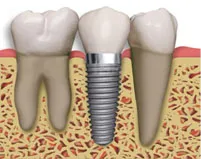
A titanium rod is placed into bone where the missing tooth is, this acts as the tooth “root”. Crown and bridgework is placed on top of rod to look like a natural tooth/teeth.
Advantages
- Feels almost exactly like real tooth
- Very easy to floss/maintain
- Excellent aesthetic result
- Don’t have to grind down any natural teeth next to gap
Disadvantages
- Costly
- Needs to be surgically placed by specialist with an approx. 3-6 month healing period
What are Immediate Dentures?
This is when a denture is place on the same visit as the teeth are extracted.
All the measurements for the dentures are taken at the first visit. The dental technician is informed which teeth are to be extracted. The denture is then made.
At the second visit the teeth to be extracted are anaesthetised. These teeth are extracted. The denture is then placed.
Instructions for Immediate Denture Patients
Your teeth have been extracted and your new denture has been fitted. Your mouth is still numb from the effects of the anaesthetic. While your mouth is still feeling numb, remove the denture and practice fitting the denture into your mouth. Don’t be apprehensive! You should not be able to feel any discomfort because of the anaesthetic.
A blood clot needs to form for healing to take place so only start rising after 6 hours. This is important!! Remove the denture and rinse gently with lukewarm salt water.
It is IMPERATIVE that you sleep with your denture. If you don’t, it is going to be very difficult to fit the denture into your mouth the following day. If the denture hurts you, do not remove it. Come and see me and I will adjust it.
You may find that the denture may become loose after a while. This differs between individuals. However, the loose fitting dentures are prone to fracture and it is advisable to have them relined. Discuss this with me and we can decide when it will be best for you.
Follow the after extraction guidelines.
DENTURE CARE
Special care has to be given to both your new dentures as well as to your mouth.
- Dentures need to be brushed at least once a day, preferably at night.
- Use toothpaste and a normal toothbrush to brush your dentures.
- Both sides of the denture must be brushed as well as the denture teeth.
- Brush it over a basin of water. ( If it falls into the water, it won’t break!)
- Once a week, put it into a glass of sterident for about 15 minutes.
- Even if you do not have any teeth left in your mouth, the areas where the dentures fit into your mouth must also be brushed.
- Pay special attention to those teeth against which the denture rests.
The denture cannot make your teeth rotten!! Your not taking care of your teeth results in cavities.
If your dentures hurt you, please contact us. Your treatment is only complete once you are completely happy and we will try our utmost to get the best results for you.
Also, dentures are not only subjected to wear but your mouth changes as time goes on. Therefore your dentures should be changed every 3 to 5 years.
Remember to visit every 6 months for your routine checkup.
NITROUS OXIDE SEDATION
It is also known as laughing gas or happy gas. It has no colour nor smell and does not make you sleep.
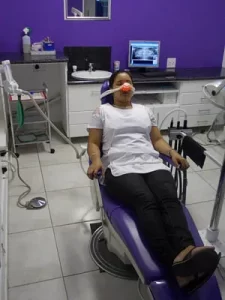
Nitrous Oxide Sedation takes place at our rooms in Salt River. A certain amount of co-operation is needed as a mask has to be kept on the nose of the patient. The patient will still need to be anaesthetised but it is much easier to do so as the patient is very calm and relaxed.
What happens once the N2O is administered?
- an initial period of light-headedness after 60 – 90 secs followed by:
- a tingling sensation especially in the arms and legs
- a feeling of heaviness followed by
- warm sensations and
- a feeling of floating and well-being.
If you experience any unpleasant symptoms such as:
- nausea
- unpleasant sensations
- flashbacks
- laughing
- becoming giddy
- crying
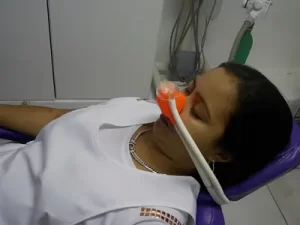
let your dentist know immediately so that the percentage of N2O can be adjusted.
Alternatively, just take the mask off.
There is no “hangover” effect and you can drive home safely and don’t need an escort.
If you are prone to nausea, it’s a good idea to have a meal about 4 hours before your appointment.
CONSCIOUS SEDATION
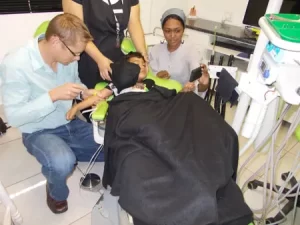
This takes place at our rooms in Salt River.
An anaesthetist is brought into our rooms to administer the sedation.
Although the patient is sedated, he/she is still able to hear and is able to follow instructions.
Children under 3yrs are not good candidates for conscious sedation.
GENERAL ANAESTHETIC
This is an in hospital procedure and requires the booking of a theatre and anaesthetist.
Children under the 3yrs are the best candidate for this form of sedation.
Why do you need a temporary filling?
When a cavity on a tooth is very deep, often the bacteria in that cavity will penetrate into the nerve chamber.
If we suspect that the bacteria has not penetrated too deeply into this area, we place a medicated dressing over the nerve area. This medication will cause the tooth to heal and acts as a painkiller as well. It takes a few days for the tooth to settle and the pain to subside. If all goes well the healing will be completed in 6 weeks and a permanent filling can be placed.
If, however, the nerve contains too many bacteria, the medication will not help and the patient will still experience pain. The pain could even feel worse than before the temporary filling was placed.
Why is the pain worse?
Before the filling was placed the bacteria could move freely out of the tooth. With the filling in place the bacteria builds up in and below the tooth resulting in throbbing pain. This tooth will now need to have this infected nerve removed by doing a root canal.
What happens if we do not replace the temporary filling?
The filling is not strong enough to withstand the chewing forces and will eventually leak. This will cause re-infection of the nerve resulting in pain and possibly the need for a root canal.
GRINDING OR BRUXING OF TEETH
Grinding or bruxing of teeth more often occurs at night. Stress is probably the biggest cause of bruxing. Habit is another cause.We cannot stop the grinding habit but what we as dentists need to do is prevent the damage to the teeth caused as a result of the grinding.
What happens if we do not intervene?
The teeth are subjected to abnormally excessive forces. This firstly causes wear of the enamel of the teeth.
- Anteriorly this causes the edges of the teeth to become very thin and eventually to chip and break. Wear of the posterior teeth results in a drop in the vertical height of the teeth giving the face a fallen in appearance especially when eating.
Secondly, the nerves of the teeth may die. This may result in severe pain or sensitivity and a root canal is indicated to alleviate this problem
Thirdly, the drop in vertical height of the teeth due to loss of enamel may cause excessive strain and resultant wear and tear on the joint of the jaw. This could progress to pain on opening of the mouth when eating or yawning as well as clicking of the joint. This problem may become so bad that surgery may be the only solution to this problem.
So what do we do?
The patient to given a laboratory made Michigan splint which rests on either the upper teeth or lower teeth. The patient needs to sleep with the splint. The teeth will slide off the surfaces of the splint and the occlusal forces are distributed equally on the splint preventing further damage to the teeth and joint.